
.png) Worldwide | English
Worldwide | English  Indonesia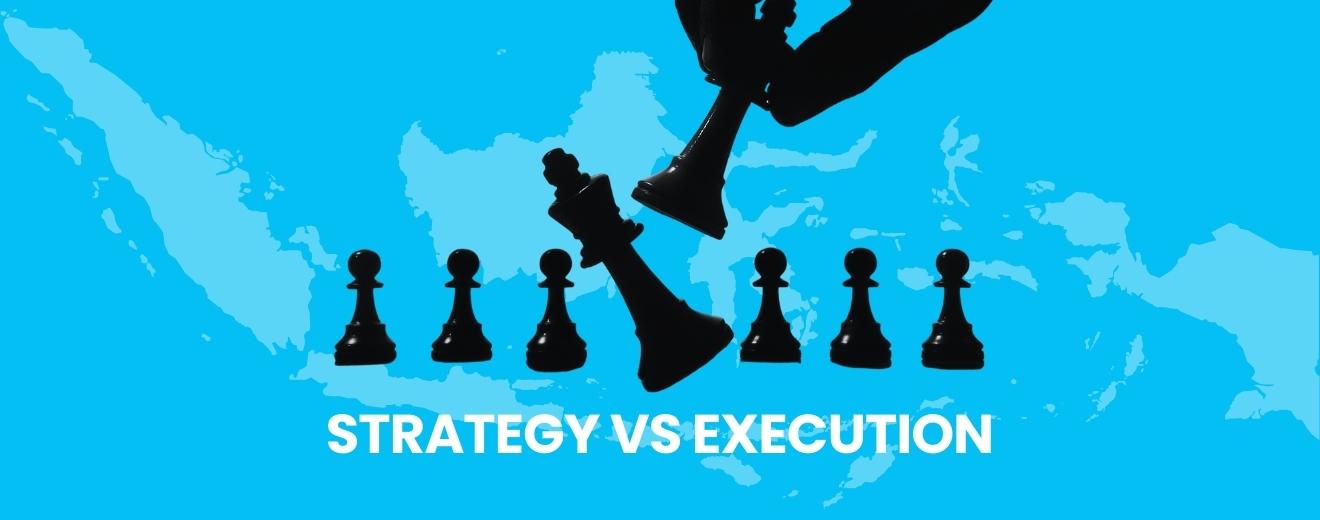
I’m on a personal quest to find out how I can best help the innovation ecosystem in Indonesia. At heart, I am an entrepreneur. I’m always seeing business opportunities around me and am inclined to ‘get going right away’. I’ve also learned that it’s good to sometimes sit on an idea a few days to see if it ‘survives’. At the same time, executing an idea on your own (as a startup founder) is ‘easy’. Doing it with a large group of people, especially in a traditional organisation, is ‘hard’. The interesting part for me is how to ‘use’ my entrepreneurial spirit and experience to help corporates in Indonesia innovate.
What I have seen in the almost 4 years I have lived here is that energy is bursting on this topic. Although Indonesia was late on the scene of ‘eCommerce’ and ‘startups’, it’s catching up quickly. Bigger enterprises now start seeing that startups innovate and disrupt their businesses. They need to ‘catch up’ (become digital for example) and also ‘create their future’ (explore the next big things on top of continuous improvement).
One of the strong points of many Indonesian people I’ve worked with is ‘execution’. When it’s clear what needs to ‘get done’, people jump up and get it done. The spirit is ‘let’s just start and move quickly’; an important ingredient of innovation and creating startups. The challenge however is getting clarity on what needs to get done, or strategy and direction.
Most leaders have the same spirit of execution. They apply ‘let’s just start and move quickly’ to large initiatives. This sometimes leaves their subordinates confused. Below image shows the tension between ‘strategy’ and ‘execution’.

Disciplined execution
I’ve recently started reading the four disciplines of execution (watch this very inspiring video to get a sense of the message). One of the things the authors describe is that the biggest challenge to any (business) initiative is not strategy, but execution. It’s ‘easy’ to device direction and strategic plans. But getting them executed is painful. In my personal experience the key to balance is to first of all focus on a handful of big initiatives.
People need to concentrate all their energy on 1 or 2 big priorities. Second, leaders need to help teams to become crystal clear about the ‘why’ and ‘how’ of the initiative. If people are in doubt why a leader leads them in a certain direction, they get resistance. If they don’t know how to achieve the outcomes the leader is after, they will also not move. Especially in a culture where asking questions when things are not clear, this leads to a lot of paralysis. From the outside it will look as if things are clear and moving, while they’re not.
Looking at innovation, I see many enterprises focus on the execution side. They equal innovation with for example ‘running a design thinking workshop’ or ‘running a startup/idea competition’. While these activities can bring ideas or entrepreneurs to the surface, they shouldn’t stand in isolation. As many people in the innovation landscape know, they often result in ‘innovation theatre’. The attractive part of this is the energy that comes along with for example an idea competition. Most people like the energy of ideation. When participating in design thinking workshops, ideas float around. People get many ideas to improve their company, services or even launch new products. But what does that account for if nothing happens with those ideas after that?
My personal innovation experience
A personal reflection on this. For years, I have been trying to build digital products inside my own companies. My two companies Bridge and Ekipa employ around 100 people. Small compared to most Indonesian enterprises we help with our innovation programs. The focus of both my companies has always been ‘services’. We help customers build digital products as well as run agile innovation transformations. Although ideas float around for products, there are 2 big challenges: A. people are usually busy servicing customers and B. the ‘mindset’ of our people is ‘service’, not ‘product’.
The past year I’ve been pushing my team to become a ‘startup studio’: a team focused on ideating, validating and finding product market fit for new products. I’ve decided to make this a big priority in the company and personally I keep moving people in that direction. The first serious initiatives are coming up now and I am confident we will manage to launch several successful products in 2020. However, looking at the effort it takes to get such an initiative in a 100 people strong company, I also see that making this happen in a company with 20.000 people is no easy feat. It needs a clear strategy and a leader who keeps moving the ball forward on this against all odds.
Reading this, I know what you are thinking: I’m still not telling you ‘how to do it’. How to develop a strong strategy and then execute it.
The Agile innovation path
At Ekipa, we’ve developed an agile innovation path to answer that question. In essence, very simple:
Step 1: Define innovation thesis and ‘engines’
This means we define what specific innovation we are looking for. Do we want ‘improvement to our current processes or services?’ Or do we want ‘new business models for our existing business?’. Or maybe ‘disruptive innovation in the form of new products’?
We then define the ‘engines’ we will start that will result in innovation. Some key engines:
> creating an innovation team to identify and support initiatives
> starting an incubation program (internal and/or external)
> creating a corporate startup program (internal startups)
> a corporate VC to invest in external startups
> collaboration with external startups
Step 2: define roadmap and pilot
This is where the ‘agile’ comes in. We define on a high level all the activities we must execute. We add that to a roadmap which roughly maps out those activities on a quarterly basis. The total timeline can be one or two years.
We then define in more detail all activities for the first quarter. The key goal of the first quarter should be a ‘pilot’: the first project that will get us started and can create positive outcomes (proof). Typically, this would be starting the innovation team and that team supporting one or two innovation teams that are already running in the company. Or it could be a startup competition to attract external startups.
Iterative strategy
The key to our approach is that everything happens incrementally. We define a high level strategy, while acknowledging this is subject to change (based on the feedback/outcomes we get). We assemble an innovation team with the understanding that they also iteratively form and grow in their knowledge and experience. We plan for 1 quarter, launch the first initiatives, gather all our learning and then decide what we do in the next quarter (for which we already have a high level roadmap).
Lean startup applied to ‘innovation’ programs
Most startups use ‘the lean startup’ as their guide. The central idea is creating an MVP to test our assumptions. We build that MVP, let users interact with it, generate data and then learn from the data. With data in hand, we build the next version of our MVP. In our agile innovation path, the product is ‘innovation’. We define the MVP together, launch it, learn and build the next version. Once we find ‘product market fit’ (successful innovations that contribute to the goals we set out to achieve), we scale the product.
Conclusion
My personal experience is that this model brings the right balance between strategy and execution. We stay within the spirit of ‘let’s just start and move quickly’, yet we spend enough time to think through direction and ‘engines’ with leaders. We focus on clarifying the priorities and ‘how’ for the activities happening in the first quarter, yet not on the activities that happen later. We get started and learn along the way, without getting stuck in long term strategic planning.