 Singapore | English
 .png) Worldwide
Worldwide Indonesia
 Malaysia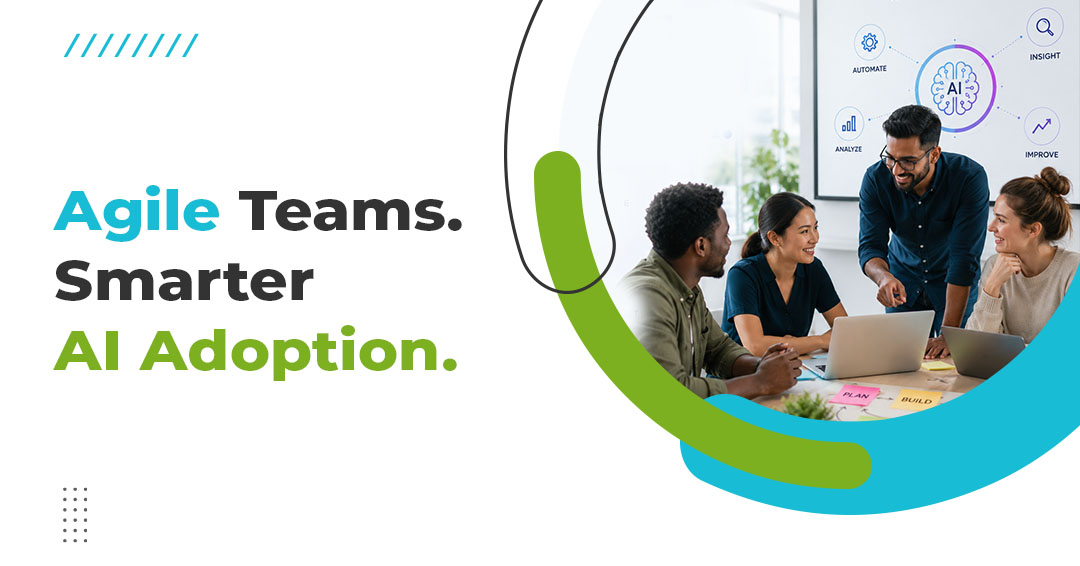
For many organisations, adopting artificial intelligence is no longer a future ambition. It is a present priority. Businesses are exploring new ways to use data, automate processes, and improve decision-making. However, the real challenge is not just introducing new technologies but ensuring they are adopted effectively across different teams.
This is where AI adoption across teams becomes critical. AI cannot succeed in isolation within a single department. It needs to be integrated into workflows, embraced by employees, and supported by a culture that encourages experimentation and learning. Agile ways of working, with their focus on flexibility and collaboration, provide a strong foundation for making this possible.
Instead of treating AI as a one-time implementation, organisations can use agile principles to make adoption continuous, structured, and scalable.
Why AI Adoption Requires a Team-Level Approach
AI initiatives often start within technical teams, but their impact extends far beyond. Marketing teams use AI for customer insights, operations rely on automation for efficiency, and leadership depends on data-driven decisions.
When adoption is limited to a single function, its value remains restricted. Organisations need a broader approach where multiple teams work together, share insights, and align their efforts.
Agile ways of working support this by breaking down silos and encouraging cross-functional collaboration. Teams work in smaller cycles, share feedback regularly, and adapt quickly based on results. This creates an environment where AI use cases can be tested, refined, and scaled across the organisation.
How Agile Principles Support AI Integration
Agile is built on a few core principles: iteration, collaboration, and continuous improvement. These principles align naturally with the way AI systems are developed and deployed.
AI projects often involve uncertainty. Outcomes are not always predictable, and systems need to be trained, tested, and refined over time. Agile enables teams to manage this uncertainty by working in short cycles and learning from each iteration.
This approach also supports AI-driven development, where teams continuously improve systems based on data insights rather than fixed assumptions. By combining agile practices with AI capabilities, organisations can create workflows that are both flexible and intelligent.
Breaking Down Silos with Cross-Functional Collaboration
One of the biggest barriers to AI adoption is the lack of collaboration between teams. Data scientists, developers, business teams, and operations often work separately, leading to misalignment.
Agile ways of working address this challenge by encouraging cross-functional teams. These teams bring together different skills and perspectives, making it easier to design and implement effective AI solutions.
For example, a product team working with data specialists can better understand how AI can enhance user experience. Similarly, operations teams can collaborate with engineers to identify areas where intelligent automation can improve efficiency.
This level of collaboration ensures that AI initiatives are practical, relevant, and aligned with business needs.
Faster Experimentation and Learning
AI adoption requires experimentation. Not every idea will succeed, and that is part of the process. Agile creates a safe environment for testing ideas without large-scale risks.
Teams can start with small pilots, explore different approaches, and refine their strategies based on feedback. This is especially important when working with emerging technologies like generative AI, where use cases are still evolving. By focusing on smaller experiments, organisations can identify what works and scale successful initiatives more effectively. This reduces risk and increases confidence in AI adoption.
The Role of AI Tools in Agile Teams
Modern AI tools play a key role in enabling teams to adopt AI more efficiently. From data analysis platforms to automation systems, these tools help teams work faster and make better decisions.
However, tools alone are not enough. Without the right processes and mindset, they often remain underutilised. Agile ensures that tools are integrated into workflows in a meaningful way.
Teams regularly evaluate how tools are being used, identify gaps, and make improvements. This continuous feedback loop ensures that technology delivers real value rather than becoming an isolated investment.
Training and Upskilling for AI Adoption
For AI to succeed across teams, employees need the right skills and confidence to use it effectively. This requires a strong focus on training and continuous learning.
Agile organisations are already familiar with this approach. They encourage knowledge sharing, hands-on learning, and collaboration, making it easier for teams to adapt to new technologies.
Structured training programs, supported by insights from an AI strategy report, can help organisations align learning with business goals. This ensures that employees are not just using AI tools but understanding how to apply them in real-world scenarios.
Challenges Organisations Must Address
While agile ways of working support AI adoption, organisations still face challenges.
Resistance to Change
Employees may be hesitant to adopt new technologies. Clear communication and training are essential to build trust.
Lack of Clear Direction
Without a defined approach, AI initiatives can become scattered. A structured AI implementation plan helps teams stay aligned.
Data and Quality Issues
AI systems depend on high-quality data. Poor data can lead to inaccurate outcomes.
Scaling Across Teams
Expanding AI from one team to multiple teams requires coordination, standardisation, and continuous monitoring. Organisations that address these challenges early are more likely to succeed.
How Organisations Can Move Forward
To support AI adoption across teams, organisations need to combine agile practices with a clear vision. They should start by identifying meaningful opportunities where AI can add value and align those opportunities with business objectives. Building cross-functional teams, encouraging collaboration, and investing in training are key steps.
Agile practices should be extended to include AI workflows, ensuring that development, testing, and deployment remain continuous and adaptable. Over time, this approach helps organisations scale their AI initiatives effectively.
Where AI Adoption Is Heading
AI is becoming a central part of how organisations operate. Its success depends not just on technology, but on how well it is adopted across teams.
As AI adoption across teams continues to grow, organisations that embrace agile ways of working will be better positioned to adapt, innovate, and deliver value. By combining flexibility, collaboration, and intelligent systems, they can create a more resilient and future-ready way of working.
If your organization is looking to accelerate AI adoption across teams and build the right processes, skills, and culture, contact our team to start the conversation.