.png) Worldwide | English
Worldwide | English  Indonesia
 Singapore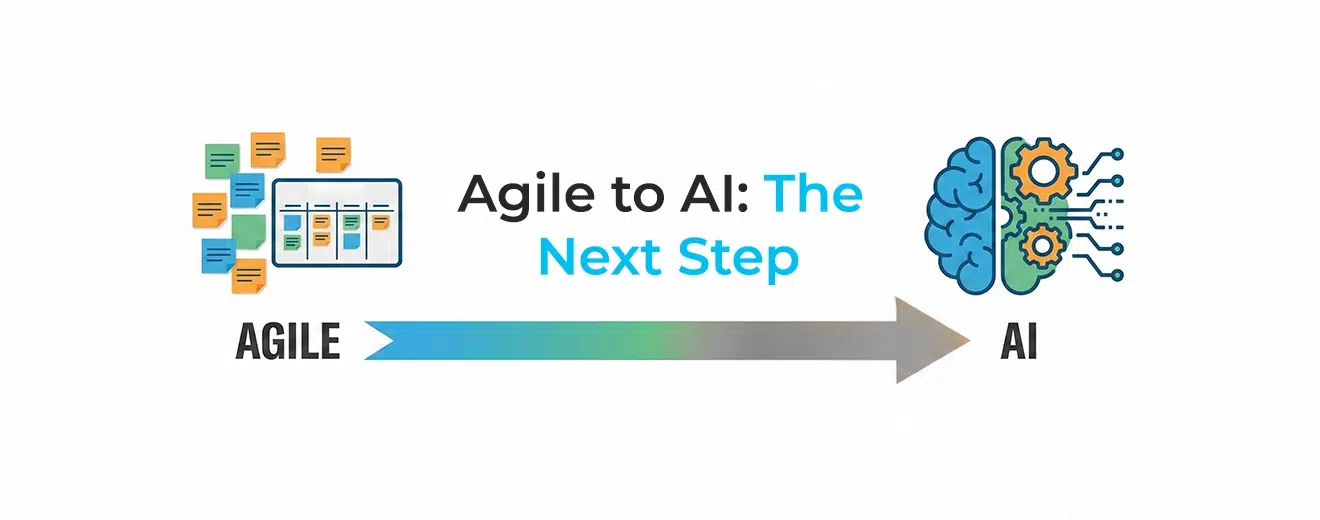
For more than a decade, Agile has been the backbone of modern organisational transformation. It gave teams a shared language for collaboration, a rhythm for continuous delivery, and a mindset that encouraged experimentation over bureaucracy. But today, organisations face a new shift—one that is as fundamental as the rise of Agile itself: the rapid integration of Artificial Intelligence (AI) into everyday work.
While many companies still struggle to fully adopt Agile, the next wave has already arrived. Leaders now ask a different question: How do we evolve our ways of working from Agile into AI-enabled operations without losing the human strengths that made Agile successful?
This evolution isn’t about abandoning Agile; it’s about extending its principles to thrive in an AI-powered workplace. Here’s an insightful piece about organizational transformations.
Agile Teams Are Already Prepared for AI. But, They Just Don’t Know It Yet
Agile taught organisations to move fast, learn fast, and adapt continuously. These same behaviours are essential when adopting AI. Most agile teams already have the cultural foundations. They just need guidance in applying them to new tools and new decision-making models.
In fact, AI transformation mirrors many stages of Agile adoption: creating cross-functional squads, shortening learning loops, and iterating from small pilots instead of investing in massive upfront plans.
This is why organisations find value in partnering with experts who understand both worlds—like the team behind Ekipa.ai, where AI strategy, experimentation, and responsible implementation follow the same principles that once fuelled Southeast Asia’s Agile movement.
Agile Helps Organisations Avoid the Biggest AI Adoption Mistakes
1. Starting with Technology Instead of Outcomes
One of the most common pitfalls is deploying AI tools because they look impressive, not because they solve a real business problem. Agile taught us to begin with user value. AI needs the same discipline.
Real-world example:
A retail company built an AI-powered demand forecasting system without involving store managers. The model was accurate, but it didn’t account for local realities like festival demand or unplanned store closures.
Had they applied Agile ways of working: co-creation, feedback loops, and user insight, the rollout would have been far smoother.
This is why good AI adoption frameworks always begin with use case discovery, not technology selection.
2. Overbuilding Instead of Iterating
Organisations often feel pressured to deploy “enterprise-scale AI.” But the Agile mindset teaches us to start small and reduce risk.
Example:
A Southeast Asian telco began its AI journey by prototyping a simple customer service assistant trained on internal policies. The prototype revealed major gaps in policy structure and customer journey data, issues that would have compromised a large-scale deployment.
The lesson? Mini-experiments reveal hidden realities faster than a 12-month implementation plan.
Teams exploring early opportunities can experiment safely using tools such as Ekipa’s AI Strategy Consultant, which helps translate messy organisational goals into prioritised use cases. Explore and download some pre-built AI strategy reports for diverse industries here.
3. Ignoring Organisational Readiness
AI doesn’t just require new tools. It requires new behaviours.
Agile brought stand-ups, retros, and customer collaboration. AI brings prompt engineering, human-in-the-loop validation, data literacy, and ethical oversight. This shift is less about new frameworks and more about upgrading the way teams work together.
Companies still relying on top-down decision-making or siloed teams often struggle the most. That’s where Agile training and coaching continue to play a role. The habits born from Agile: openness, transparency, shared learning, make AI adoption significantly easier.
How Organisations Can Evolve from Agile to AI Without Losing Their Culture
1. Keep Cross-Functional Collaboration at the Centre
AI projects cannot sit with IT alone. You need product teams, operations, compliance, domain experts, and end users—mirroring the cross-functional squads Agile teams are built on.
This is the approach companies learn through Ekipa’s consultancy work: assemble the right people early instead of trying to fix misalignment later.
2. Expand “Continuous Improvement” Into “Continuous Intelligence”
Agile retrospectives help teams learn. AI expands that learning loop by using data—not opinion—to refine decisions.
Example:
A logistics company used machine-learning models to optimise routing. But they kept weekly retros to review where the model underperformed. Instead of replacing human judgement, the AI system became a tool for sharper decision-making.
This is the future of modern work: human insight amplified by AI-driven intelligence.
3. Prioritise Ethical, Responsible AI by Design
Agile taught teams to deliver value quickly. AI teaches teams to deliver value safely. Responsible AI frameworks, like transparency, bias testing, and human oversight, should be embedded from the first prototype. Tools and guides like those shared in Ekipa’s blog section help teams understand what responsible adoption looks like in practice.
4. Build AI Fluency Across All Roles
Not everyone needs to become a data scientist, but everyone needs to understand how to use AI safely and effectively.
This is where many organisations fail: they train the specialists but forget the operational teams.
AI fluency programmes—similar in style and spirit to Agile coaching—ensure every employee can participate in innovation, not just the technical experts.
The Shift from Agile to AI Is Not a Replacement. It’s an Expansion
Agile transformed how organisations deliver. AI transforms how organisations decide.
Together, they create a new operating model: one where learning cycles are faster, decisions are smarter, and teams are more empowered than ever before.
Organisations that embrace both will not only remain competitive. They will shape the future of work.
If your organisation is ready to explore what this evolution looks like in practice, start by experimenting with Ekipa’s AI Strategy Consultant (ask your questions in the interactive Q&A field) or schedule a call with our team.
Remember: Transformation starts small, just like Agile taught us.